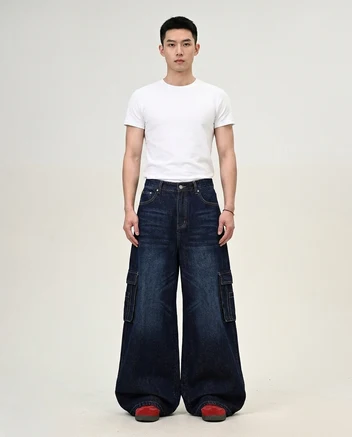
Loose denim can look effortless, but choosing the right pair requires more attention than simply buying regular jeans in a larger size. The waist, thigh width, rise, fabric weight and inseam all influence how the jeans fall and whether the final outfit looks intentional.
Understanding these elements makes it easier to find a wide silhouette that provides both comfort and structure.
Start With the Correct Waist Size
The most common mistake is sizing up several inches at the waist to create more room through the legs. This usually produces a waistband that slips while leaving the underlying shape of the jeans largely unchanged.
Properly designed baggy jeans already include additional room through the seat, thigh and leg opening. The wearer can therefore select a normal waist size and allow the cut itself to create the volume.
The waistband should feel secure without requiring a tightly fastened belt. If the jeans fit correctly at the waist but remain wide below it, the silhouette is working as intended.
Choose the Right Level of Volume
Not every loose pair has the same proportions. Relaxed-fit jeans provide a modest amount of extra room and are generally the easiest transition from straight-leg denim. Loose-fit styles are wider through the thigh but may still maintain a relatively controlled shape.
Traditional baggy cuts create a clearly oversized leg from the thigh to the hem. Super-baggy jeans go further, using additional fabric to produce maximum movement and stacking around the shoes.
The right option depends on the intended outfit. A subtle relaxed fit works well in casual and smart-casual wardrobes, while wider cuts are more closely associated with skate, streetwear and Y2K-inspired styling.
Consider the Rise and Inseam
Rise determines where the jeans sit on the body. A higher rise can create a longer visual line and works naturally with tucked or shorter tops. Mid-rise jeans offer a balanced everyday fit, while low-rise styles create a more pronounced early-2000s appearance.
Inseam length is equally important. A shorter inseam produces a clean break near the shoe. A longer inseam allows the denim to stack over sneakers or boots, emphasizing the width of the leg.
Stacking should still appear controlled. Excess fabric that repeatedly drags on the ground can damage the hem and make the jeans look poorly sized rather than intentionally loose.
What to Look for in Men’s Fits
Good men’s baggy jeans should provide enough room through the seat and thigh to allow comfortable movement. The leg opening should also be wide enough to fall over sneakers without narrowing sharply near the ankle.
People who want a skate-inspired look can choose a longer inseam and heavier denim. For a cleaner everyday outfit, a medium-weight fabric with a straighter fall may be more practical.
Pocket placement also affects the appearance of the fit. Larger back pockets generally look more proportionate on wider jeans, while very small pockets can make the seat appear broader than intended.
Pay Attention to Fabric Weight
Lightweight denim feels softer and moves easily, making it useful in warmer weather. However, it may not hold a strong silhouette throughout the day.
Heavier denim creates more structure and usually produces clearer folds and stacking. It can initially feel stiffer, but it often softens with wear. Medium-weight denim offers a balance between these two characteristics and is suitable for most everyday outfits.
Stretch denim can improve comfort, but a high percentage of elastic fiber may cause an oversized leg to lose its shape. Wide jeans generally benefit from fabric that has enough structure to maintain the intended cut.
Balance the Rest of the Outfit
A wide lower half does not require every other garment to be oversized. A fitted T-shirt, cropped jacket or structured shirt can create contrast and keep the proportions balanced.
An oversized hoodie or coat can also work, but the outfit should retain at least one clear point of structure. This might come from the waistband, the shoulders of a jacket or the shape of the footwear.
Sneakers with a substantial sole, work boots and skate shoes naturally complement wider hems. Slim shoes can still be worn, although extremely wide jeans may visually overwhelm them.
Focus on the Cut, Not the Size Label
The best loose denim should fit securely at the waist, provide deliberate volume through the legs and fall naturally over the chosen footwear. Buying a larger size cannot reliably reproduce those proportions.
By evaluating the rise, inseam, fabric and actual width of the cut, shoppers can choose jeans that look intentional while remaining comfortable enough for everyday wear.