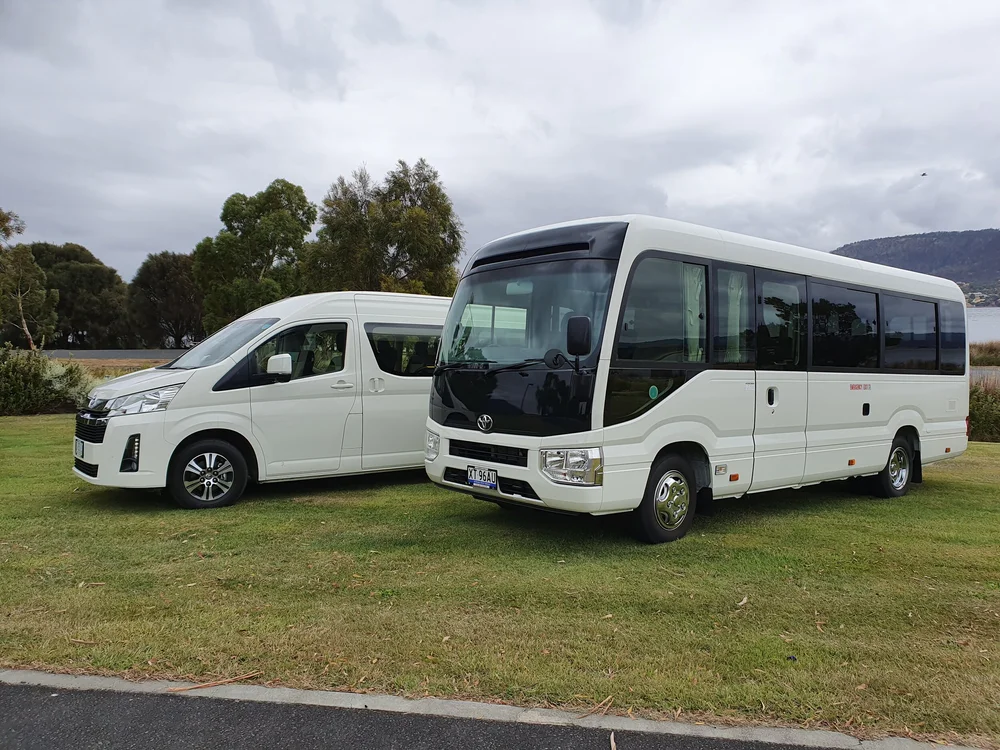
Operating a hired minibus in Tasmania requires adherence to clear licensing and legal standards designed to promote road safety across the state’s varied terrain. For most common minibus models seating up to 12 people (including the driver), a standard full Australian car licence (Class C) is typically sufficient, provided the driver meets age and experience criteria. This makes self-drive hire accessible for many visitors and locals alike. However, vehicles exceeding 12 seats or with a gross vehicle mass over 4.5 tonnes usually necessitate a Light Rigid (LR) licence or higher, reflecting the increased responsibility of handling larger passenger loads and different vehicle dynamics.
International drivers must present a current foreign licence accompanied by an International Driving Permit (IDP) issued in their home country, along with a passport for identification. Licences not in English often require an official translation. Most hire providers enforce a minimum age of 21 years and may require the licence to have been held for at least 12 consecutive months without suspensions. Provisional or learner licences are generally not accepted for minibus operation due to the vehicle’s size and passenger-carrying nature.
Legal obligations extend beyond the licence itself. Drivers must comply with Tasmania’s road rules, which mirror national standards but emphasise caution on rural and coastal routes. Speed limits vary—typically 50 km/h in built-up areas like Hobart, 80-100 km/h on highways, and lower on unsealed or national park roads. Strict drink-driving laws apply with a zero blood alcohol limit for certain licence holders or professional drivers. Seatbelts are mandatory for all occupants, and child restraint rules follow age and height guidelines, with appropriate seats often available as hire extras.
Insurance and documentation requirements are equally important. Hirers must carry the rental agreement, proof of insurance, and vehicle registration at all times. Comprehensive insurance is standard but comes with an excess amount that can be reduced for additional fees. Certain conditions, such as driving on unsealed roads without permission or overloading the vehicle, may void coverage. Fatigue management is encouraged on longer trips, with rest breaks recommended every two hours given Tasmania’s winding roads.
Additional regulations include adherence to biosecurity measures when moving between regions, though these are more relevant for produce or equipment than passengers. Parking and stopping rules in Hobart’s city centre and popular tourist zones must be observed to avoid fines. For groups hiring with a professional driver, that individual holds the appropriate commercial endorsements. Understanding these requirements upfront ensures compliance, reduces risk, and allows focus on enjoying Tasmania’s landscapes safely. Regular vehicle checks for tyre pressure, lights, and fluid levels before departure further support legal and practical readiness. By meeting these standards, minibus operators contribute to the safe enjoyment of Tasmania’s roads for all users.
Tasmanian Minibus Hire // 12 Seat Minivan Hire // 21 Seat Coaster Hire